A different kind of drive. A thoughtful approach to your brakes.
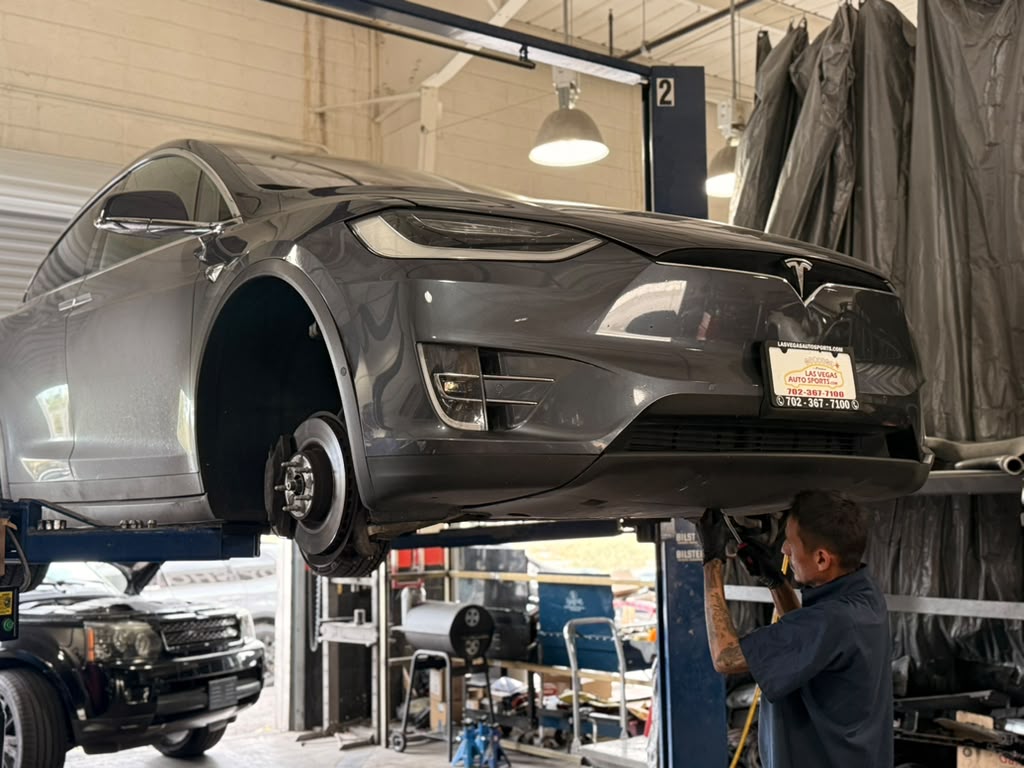
Universal Motorcars provides Tesla brake inspections and repairs at Spring Mountain and Post Road in Las Vegas. From a squeak to shaking when you stop, we inspect the concern and explain your options before you approve the work.
MODEL 3 / MODEL Y / MODEL S / MODEL X / CYBERTRUCK
SPRING MOUNTAIN + POST ROAD
01LISTENTell us what changed.
02INSPECTWe check the complete concern.
03EXPLAINYou decide what happens next.
THE FIRST SIGNAL
Something feels different. Let’s take a closer look.
Your Tesla may be quiet. A brake concern doesn’t have to be.
01 / SOUND
Hearing squeaking or grinding?
Does it happen on your first stop, while reversing, or every time you brake? Those details help us investigate. We check the brake pads, the metal discs they press against, and the nearby hardware. A noise alone doesn’t tell us what needs replacing—we’ll explain what the inspection shows before recommending work.
02 / FEEL
Shaking when you slow down?
Tell us where you feel it: the steering wheel, brake pedal, or seat. Does it happen only when braking? We inspect the brakes and check related wheel, tire or suspension concerns when needed. The goal is to find what’s causing the shaking, rather than replace brake parts and leave the problem unresolved.
03 / ALERT
Seeing a brake warning?
Save the exact message and tell us when it appeared. A warning tells us something needs checking; it doesn’t automatically identify a failed part. We use the message and inspection findings to guide the evaluation. If stopping feels weaker or the vehicle tells you to stop, pull over safely and arrange assistance.
BRAKE SERVICE, CONSIDERED
More than pads and rotors.
Regenerative braking helps slow your Tesla, but it doesn’t eliminate the friction brakes. Pads, rotors, calipers and brake fluid still need attention when inspection or vehicle guidance calls for it.
We look at wear patterns and the condition of the system—not just the mileage.
Not every noise calls for a complete brake job. Depending on the concern, we may inspect pad thickness, rotor condition, caliper movement, hardware, fluid and related wheel or suspension components.
Pads: how much braking material remains and whether wear is even.
Rotors: the condition of the metal discs the pads press against, with measurements when needed.
Calipers and hardware: whether the parts applying and releasing the pads are working properly.
Related concerns: visible leaks, fluid condition, warning messages and wheel or suspension issues that may explain the symptom.
If work is needed, we’ll walk you through the findings and your estimate. Confirm inspection charges and what the initial assessment covers when arranging your visit.
INSPECTED WITH PURPOSE ↗
A CLOSER LOOK
The details behind a better decision.
01 / WEAR
Why did the pads wear unevenly?
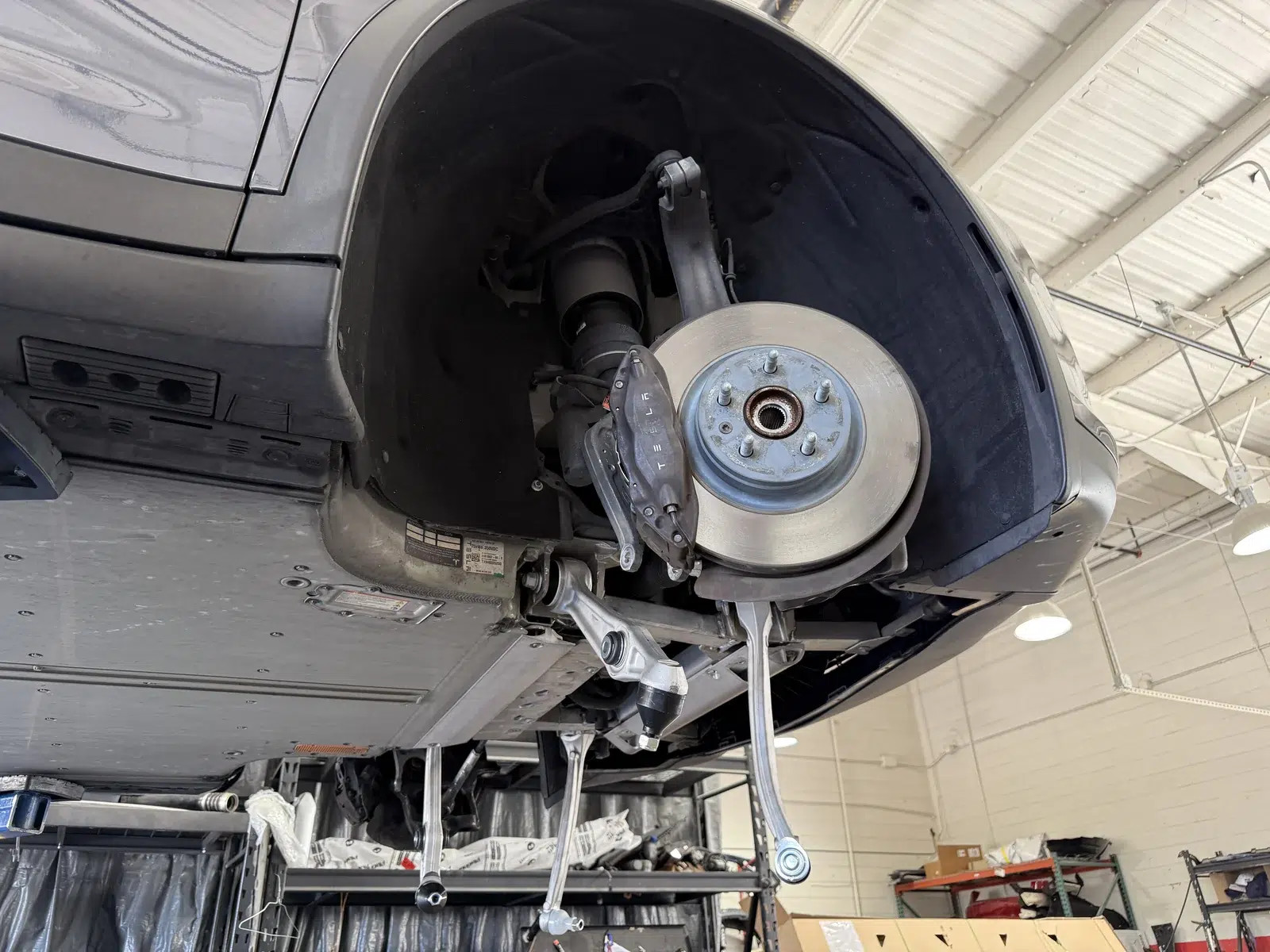
Here’s the simple version: the caliper squeezes the brake pads against a metal disc called the rotor. That friction helps slow your wheels. If one pad is wearing differently from another, replacing the pads alone may not explain why. We examine the wear pattern, rotor condition, caliper movement and related hardware before recommending the repair.
The right parts and service limits depend on your Tesla’s model, year and brake configuration. We’ll explain what we found and which components need attention.
02 / ESTIMATES
What affects the cost?
Two Tesla brake estimates may cover very different work. Replacing pads on the two front wheels, for example, is different from replacing pads and rotors or fixing a caliper that isn’t releasing properly. Investigating a warning can involve different work again. When comparing quotes, check whether it covers the front or rear wheels, which parts and labor are included, and whether it lists fluid work, taxes and fees.
Bring an existing estimate if you have one. Once we’ve evaluated your vehicle, we can explain our findings and the proposed work before you decide.
03 / IMPACT
Did it start after a pothole or collision?
If your Tesla brakes, steers or tracks differently after an impact, the evaluation shouldn’t stop at the brake pads. The wheel, tire, steering, suspension, alignment and nearby braking components may need attention together. Universal Motorcars can coordinate mechanical and collision findings.
Regenerative braking helps slow the car and recover energy, but the friction brakes still matter. Less frequent pad use doesn’t make the system maintenance-free: rotor surfaces and hardware can still develop corrosion. Brake-fluid service is a separate consideration from pad thickness.
We consider your model, service guidance, symptoms and inspection findings instead of applying one blanket interval to every Tesla. Save the exact warning message for your visit, and follow any instruction to stop driving.
ANOTHER SET OF EYES
Already have an estimate?
Bring it with you. We’ll inspect the concern, review our findings and explain the proposed work so you can make an informed decision.
Yes. Regenerative braking can reduce how often the friction brakes are used, but Tesla vehicles still have brake pads, rotors, calipers, brake fluid and related hardware that should be inspected and repaired when their condition or a symptom indicates service.
Possible signs include grinding, persistent brake noise, changed stopping response or a confirmed low or uneven pad measurement. A sound alone cannot determine pad condition, so Universal Motorcars inspects the brake system before recommending replacement.
Yes. We inspect and provide applicable Tesla brake-pad, rotor, caliper, hardware and brake-fluid service for Model 3, Model Y, Model S, Model X and Cybertruck vehicles. The exact repair depends on the vehicle and confirmed findings.
Braking vibration can involve rotor condition, caliper operation or related brake components, but wheel, tire, suspension and alignment concerns can create overlapping symptoms. We inspect the connected areas before identifying the repair.
We can evaluate applicable brake warnings using the physical inspection and diagnostic information available for the vehicle. The warning, model, year and confirmed condition determine whether the repair is within our service scope.
Yes. We can inspect brake-fluid condition and provide applicable brake-fluid service. We base the recommendation on the vehicle, condition, applicable procedure and inspection findings rather than using one blanket interval for every Tesla.
Yes if braking, steering or handling changed, a warning appeared, or the wheel and tire area was damaged. The brake, wheel, tire, suspension and alignment concerns may need to be evaluated together.
The cost depends on the model and brake configuration, which axle needs work, and whether the repair involves pads, rotors, calipers or other components. Universal Motorcars evaluates the vehicle and provides an estimate for the work identified. When comparing estimates, check that they cover the same parts, labor and axle.
That decision depends on the rotor measurements, condition and applicable service requirements. We inspect the rotors and pad wear before recommending the repair, rather than assuming every brake noise needs a complete pad-and-rotor replacement.
Timing depends on the inspection findings, required parts and available appointment time. Tell us your model and symptoms when requesting service. We can discuss scheduling and give a more useful repair-time estimate once the work is identified.
Ask us to confirm the repair warranty for the parts and labor in your estimate before approving the work. Coverage details and exclusions matter, particularly for components subject to wear. Keep your invoice and contact the servicing location if you have a concern after the repair.
Yes. Universal Motorcars provides independent Tesla brake inspection and repair at both Spring Mountain and Post Road in Las Vegas. We inspect the vehicle, identify the work needed and review the parts, estimate and timing with you. Tell us your model and year when requesting service so we can confirm the details for your vehicle.
There isn’t one mileage that tells every Tesla owner to replace the pads. Regenerative braking can reduce wear, but driving habits and the condition of the brakes still matter. We check the remaining pad material and how evenly it is wearing. A high odometer reading alone doesn’t prove you need new pads, and low mileage doesn’t rule out a brake problem.
That can be different from a worn-pad problem. Tesla explains that regenerative braking on models such as Model 3 can be limited when the battery is cold or fully charged, changing how strongly the car slows when you lift off. Stay prepared to use the brake pedal. If pedal braking feels weaker or a brake warning appears, follow the vehicle’s safety instructions and arrange an evaluation.
Tesla’s current general maintenance guidance recommends testing brake fluid for contamination every four years and replacing it when needed. Heavy brake use, including towing, mountain descents or performance driving, may call for earlier checks. Confirm the guidance for your model and year. Fluid testing is separate from measuring pad wear; one doesn’t tell you whether the other needs service.
Tell us what you’re noticing and choose your preferred location. Our team will contact you to arrange an inspection. Your appointment is confirmed when we contact you.
Have a warning message or existing estimate? Keep it handy for your visit.