
Universal Motorcars · Las Vegas
Car painting &
paint repair
in Las Vegas.
Scraped bumper or paint damage after an accident? We handle bodywork, color matching and refinishing, with a clear repair plan for your car.
Insurance repairs & self-pay customers welcome.
Two Las Vegas locations.
One careful approach to your repair.
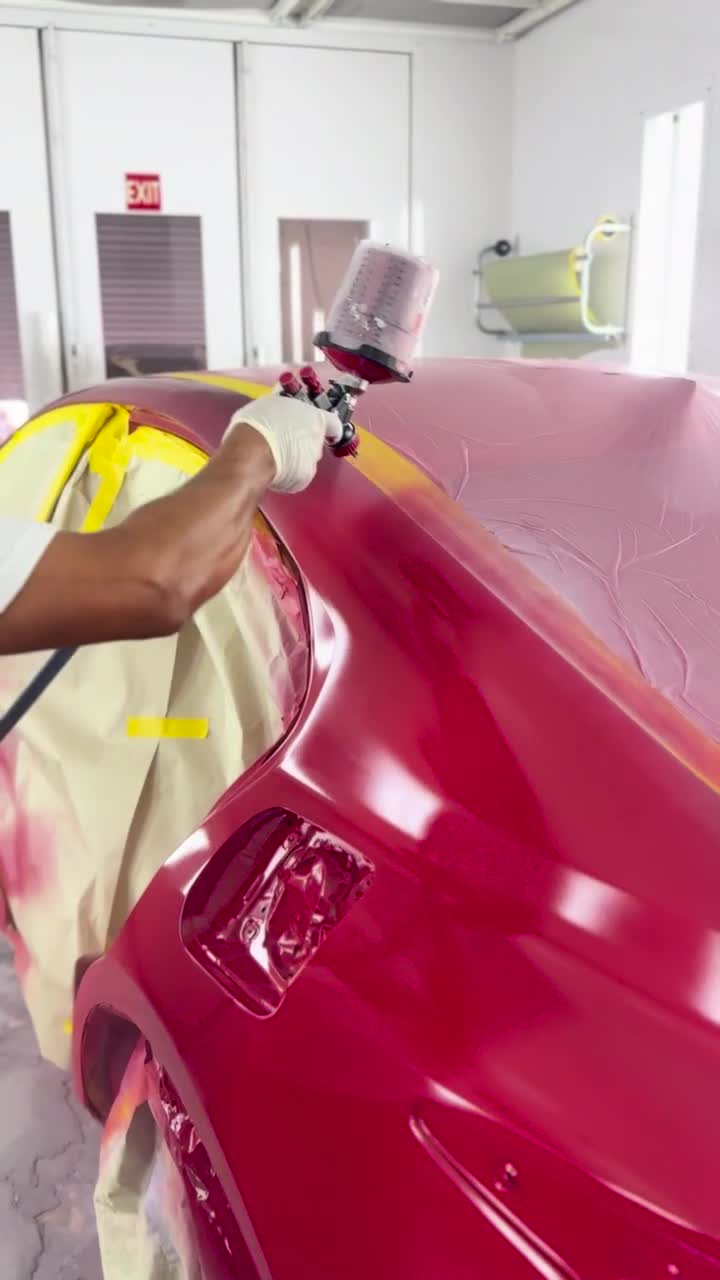
01 / Understand your options
Does it need polishing,
repairing—or repainting?
Not every mark calls for new paint. We look at the depth of the damage, the condition of the existing finish and what you want to achieve.
On the surface
Light marks & dullness
Some surface scuffs, transferred paint and light scratches can improve with cleaning or polishing if the clear coat is still sound. Polishing removes a small amount of finish; it cannot put missing paint back.
Through the finish
Scratches, chips & scrapes
A small chip may suit a localized repair. Deeper scratches, exposed primer or a scraped bumper may need refinishing. The size of the visible mark alone doesn’t determine how much of the panel needs paint.
Below the shine
Peeling, fading & failure
Peeling clear coat has lost adhesion. Polishing won’t make it bond again. We assess how far the failure extends and the layers beneath it before planning preparation and refinishing.
Can you touch up the scratch, or does the panel need repainting?
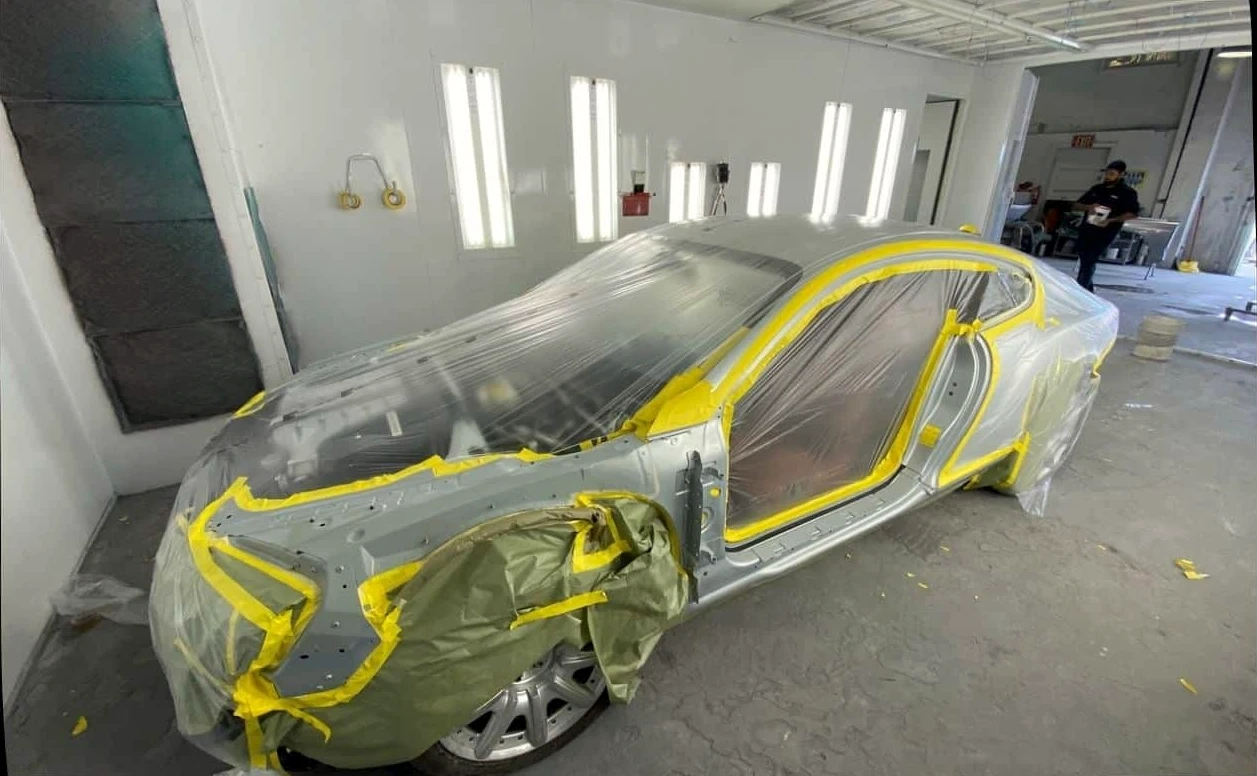
A scratch doesn’t automatically mean replacing or repainting the whole panel. First, we need to see how deep it goes. A mark sitting on top of sound paint may clean up; missing color needs a different repair.
Touch-up can make a small chip less noticeable, but it may still show up close. Refinishing means preparing and repainting the affected area for a more even appearance. The paint may need to extend beyond the scratch to achieve that.
Replacing a panel is a separate decision about its damage, material and repair limits. A crease, split or damaged mounting point can change the plan; so can restrictions around bumper sensors. We’ll explain what can be repaired and what result to expect. See our guide to bumper repair and replacement.
Looking for “paint restoration”? That can mean correcting a sound finish or replacing a failed one. Detailing, paint correction, ceramic coatings, wraps and paint-protection film are different services. We’ll assess whether paint repair is appropriate for your vehicle.
02 / Our work, in full view
The difference
is in the details.
A red Tesla Model Y from our repair archive, before and after front-corner body and finish work.
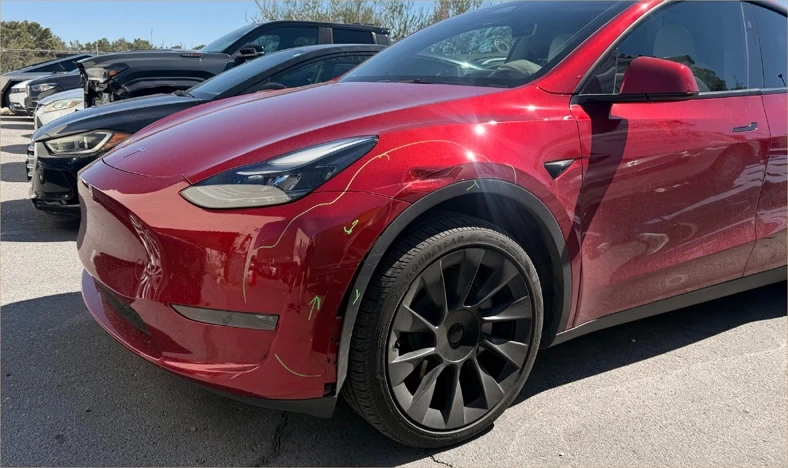
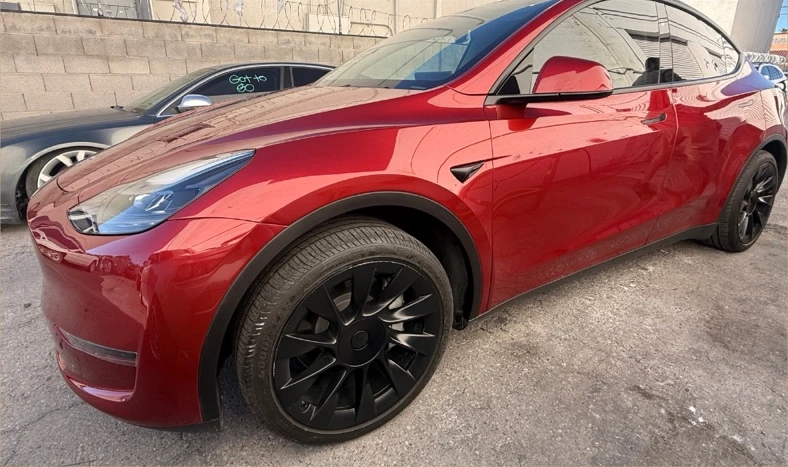
The same vehicle photographed at different stages, with similar views and different lighting.
What drivers say about the finish.
 Reviews
Selected customer review excerpts.
Spring Mountain & Post Road.
Spring Mountain
“paint matched, panels are straight, car drives exactly how it should.”
Cristina BologanTesla Model Y repair
Post Road
“The paint match was perfect, all the sensors work properly”
Dima 1Volkswagen ID.4 bumper repair
Spring Mountain
“Everything was repaired professionally and the finish looks factory-level clean.”
Zhaoyu WangCollision repair
Post Road
“Every time, they've come back looking flawless — perfect paint match, no giveaways.”
Никита МалининAudi Q5 & BMW Z4 collision repairs
03 / What goes into the finish
Good paint starts
beneath the paint.
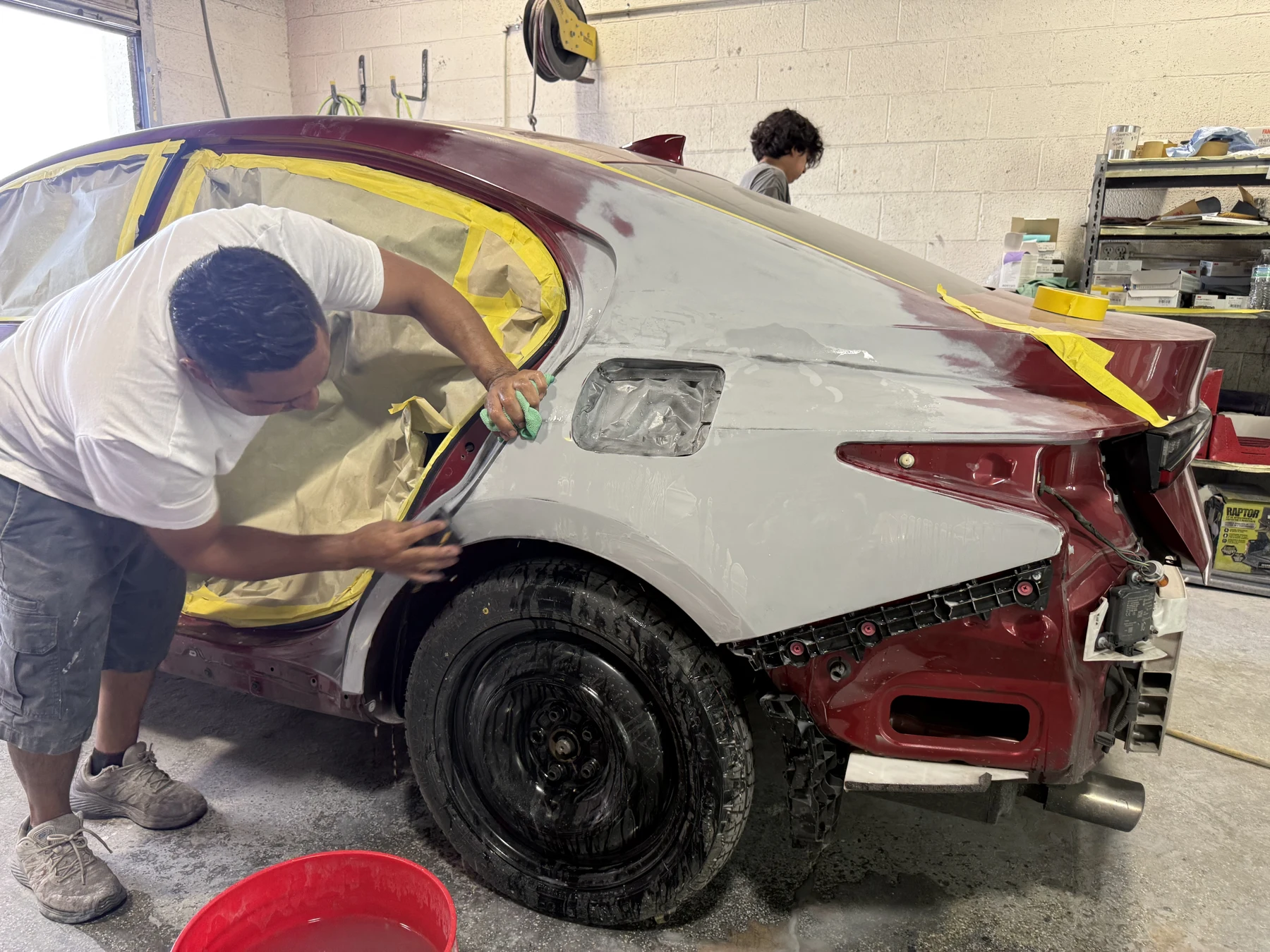
A smooth reflection begins with the surface underneath. We plan the repair around your vehicle’s condition, materials and existing finish.
01
Assess & plan
We inspect the damage and existing paint, discuss your goals and define the proposed repair area. Previous repairs and damage hidden behind panels can affect the plan.
02
Repair & prepare
The repair addresses the underlying surface, not just its color. Depending on the job, that includes body repairs, removing unstable coating, sanding, priming and protecting adjacent areas.
03
Match & refinish
We use Sherwin-Williams automotive paint. We plan color matching and any necessary blending around the surrounding finish, then refinish the prepared area using the appropriate coating process.
04
Check & hand over
We review the finished repair, including appearance and affected panel fit, along with any required vehicle-system checks. At pickup, we explain care for the new finish.
Why does the old paint need work before you spray the new color?
New paint needs a sound surface underneath it. If the old clear coat is peeling, spraying over it leaves the new finish attached to a layer that is already coming loose.
We assess earlier repairs, dents, exposed metal and any corrosion before deciding what needs to come off and what can stay. The preparation may include repairing the surface, removing failed coating, sanding and priming. Where collision work disturbs protective coatings or sealed seams, the repair plan also needs to address that protection.
Tell us about any previous paintwork, even if it was done years ago. It can help explain what we find once preparation begins.
A closer look / Color matching
There’s more to color
than the paint code.
Why isn’t my paint code enough to get a match?
The code identifies the factory color, but it doesn’t tell us everything about the paint on your car today. There can be different versions of that color, and age or previous repairs can affect the surrounding finish.
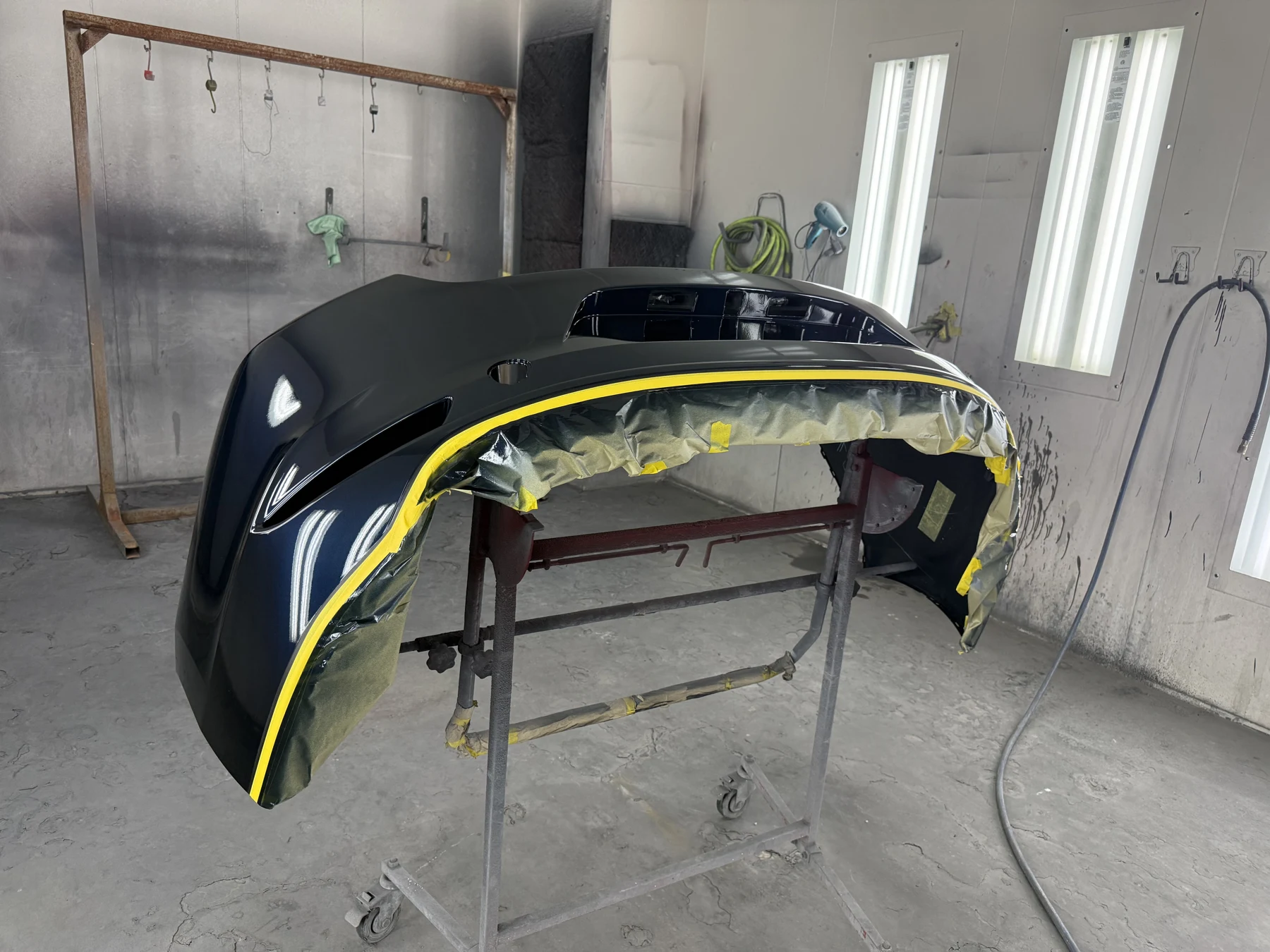
A spray-out is a small painted sample used to check a possible match before painting the vehicle. Color checks can involve comparing variants, adjusting the mixture and viewing the sample beside the car in suitable light.
Metallic and pearl finishes also change appearance with the viewing angle. Some reds and whites use extra translucent layers that contribute to the final color; others don’t. The color name alone doesn’t tell us how the repair should be painted.
Why paint the next panel when it wasn’t damaged?
Sometimes the new color needs room to transition into the existing finish. That gradual transition is called blending. It can make a difference between neighboring panels much less noticeable, even though only one panel needed body repair.
For example, a replacement fender sits right beside the original door. Ending the new color at that gap can make a slight difference stand out. Depending on the color and repair location, blending may stay within one panel or extend into the next. An adjoining panel doesn’t need paint simply because it is nearby.
In our published gray 2024 Tesla Model Y repair, the left rear door was replaced and refinished, while the left front door was blended. See how blending changes the repair plan.
Why does a small repair sometimes need clear coat across the panel?
The area that gets color and the area that gets clear coat can be different. On a basecoat-and-clearcoat finish, the basecoat supplies the color; the clear coat is the protective outer layer.
The painter may blend color through only part of a panel, then apply clear coat to the panel’s edges or an appropriate break point. The stopping point must follow the applicable paint and vehicle repair instructions. Fading clear coat out around a small spot isn’t interchangeable with blending the color.
Ask us to show you both areas on the estimate: where the color goes, and where the clear coat stops.
04 / Plan the right amount of work
Bumper or panel?
Let the damage
guide the repair.
Can you paint one panel instead of the whole car?
Yes, when the damage is limited and the surrounding finish is sound, a bumper or individual-panel repair can make sense. An accident repair does not automatically call for a full repaint. It may still need blending into a neighboring panel.
If clear coat is failing across several panels, the repair may need to cover more than the area that first caught your eye. We’ll assess how far the failure extends and explain the preparation before recommending a scope.
Tell us about earlier paintwork, even if another shop did it. Knowing what is already on the panel helps us plan the preparation and explain your options.
05 / Understand your estimate
The price follows
the preparation.
You don’t need to know paint terminology before coming in. We’ll go through the proposed work, explain why it is included and discuss what happens next.
01 / Paying yourself
Can I pay myself, and what will the estimate include?
Yes. We welcome self-pay customers as well as insurance-related repairs. Tell us what bothers you about the damage and what you hope to spend. We can then explain the suitable options and what you should expect to see afterward.
The price depends on the preparation, damaged parts, area being painted, color and any blending. Removing and reinstalling a handle, molding or bumper can also be part of the job. That work takes time even when the part itself isn’t being replaced. Scans or calibrations may be needed when the vehicle’s repair procedures call for them.
Bring the vehicle and any estimate you already have. When comparing prices, compare the work included, too. A lower price may cover a smaller repair or a different finished result.
02 / Using insurance
Why might the paint repair cost more than the first insurance estimate?
The first estimate may not include everything the repair needs. A photo can show a scraped bumper without revealing damage behind it, and the paint plan may need additional preparation, blending or trim removal.
With your vehicle at Universal and the appropriate work authorized, we document additional accident-related work and send the insurer an updated request, called a supplement. Our team explains the findings to the adjuster and follows up on the review. Here’s how our supplement process works.
A supplement is a request, not automatic approval. Your deductible, unrelated damage, coverage limits or disputed items can affect what you pay. If something could become your responsibility, we explain it before asking you to authorize that work.
Nevada law lets you choose a licensed body shop. That choice does not require an insurer to pay every charge; the policy and its reasonable-rate requirements still apply.
Before you pick up the keys
Know what
comes next.
First time having paint or bodywork repaired? These are good things to ask.
Talk with one of our teams ↗
What if the repaired paint looks different in sunlight?
Let us look at it with you. A color can seem close indoors and look different outside, so the lighting matters when you judge a match.
Metallic and pearl effects can look lighter or darker as you move around the car. Compare neighboring panels when they are clean, in the same light, and from a few angles. A bumper’s curved shape can also change the reflection. That doesn’t mean a visible mismatch should be brushed off.
If something catches your eye at pickup, point it out. If you notice it later, take a few photos in ordinary daylight and call us so we can inspect the vehicle. You don’t need to diagnose the cause yourself.
How long will I be without my car?
We can discuss a useful schedule once we’ve assessed the damage and the work involved. The time spent spraying paint is only one part of the repair.
Bodywork and preparation come first. Color checks, drying or curing, reassembly and final checks follow. Parts availability, additional damage, insurance review and any required scans or calibrations can affect the pickup date.
Ask us what is included in the expected schedule and what still needs confirmation. If the plan changes, we’ll explain why. A small scrape doesn’t always mean a same-day job, and a paint estimate’s labor hours aren’t a promise of how many hours the car will be at the shop.
When can I wash it, wax it or add a ceramic coating?
Check the instructions for your particular repair before doing any of those. Being ready to drive home is not the same as being ready for every wash product, polish or protective coating.
At pickup, ask when you can hand-wash the repaired area, when an automatic wash is appropriate, and when you can use wax, polish, a ceramic coating or paint-protection film. Those are separate questions. The paint products and curing conditions determine the guidance, so a blanket number of days can be misleading.
Once washing is permitted, wash in the shade and dry gently rather than letting water bake onto a hot panel. Don’t dry-wipe Las Vegas dust across the finish. If you’ve already booked a detailer or film installer, check with us before that appointment.
What does the paint warranty cover, and what if I notice a problem?
The written warranty for your repair should explain the coverage, how long it lasts, any exclusions and how to make a claim. Ask us to go through it before you authorize the work, including how a paint defect is treated differently from a new chip, scrape or other damage.
If you notice peeling, bubbling, a color concern or another change in the repaired finish, contact Universal and let us inspect it. Keep your repair paperwork and take a few clear photos showing the area and when you first noticed it.
Give us the chance to look before having someone else sand, polish or repaint that area. We need to see what happened before we can explain the cause, the appropriate remedy and whether it falls within the applicable warranty.
Let’s start with your vehicle
Bring us the paint problem.
We’ll talk through the repair.
Call either Las Vegas team for a free preliminary visual estimate. Tell us your vehicle’s year, make and model, the affected panels and whether you’re using insurance or paying yourself.
01 / SPRING MOUNTAIN
Spring Mountain
5585 Spring Mountain Rd
Las Vegas, NV 89146
02 / POST ROAD
Post Road
3570 W Post Rd
Las Vegas, NV 89118
Both locations · Mon–Fri 8am–6pm · Sat 8am–2pm · Sunday closed
Call before drop-off or towing. An in-person assessment helps define the repair.
Universal Motorcars
Let’s talk about
your paint.
Choose your Las Vegas team.
Spring Mountain5585 Spring Mountain Rd702-754-6774 ↗Post Road3570 W Post Rd702-430-1000 ↗Addresses, directions & hours ↓