
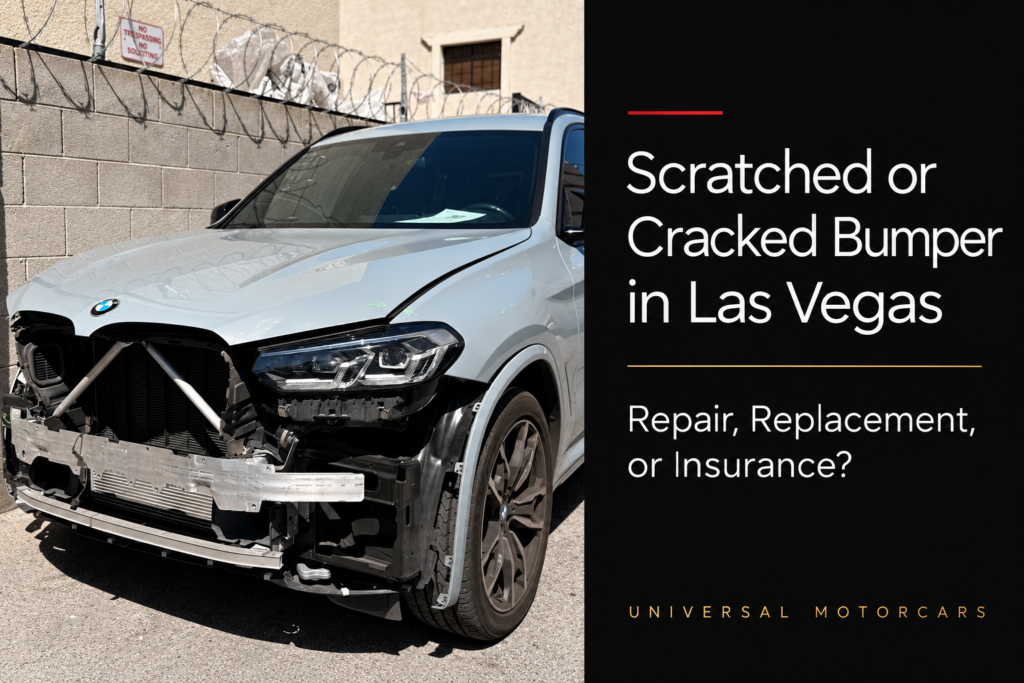
A scrape across your bumper looks like a paint problem. A crack raises a more expensive question: does the whole bumper need replacing? Before you decide whether to pay yourself or use insurance, you need to know what’s actually damaged.
Some bumper damage can be repaired. Replacement depends on the material, damage location, attachments, and the vehicle manufacturer’s repair requirements—not simply the size of the mark. Damage underneath the visible cover can also change the work involved.
What’s damaged: the finish, the cover, or something behind it?
What most people call the bumper is often the painted outer cover. Behind it are attachments and components designed to manage impact.
A surface mark and a crack through the plastic need different repairs. A corner that has popped loose may involve broken mounting points. After an impact, an otherwise tidy-looking cover can conceal damaged parts underneath.
That’s why the story behind the damage matters. Tell the shop whether you scraped a stationary object or another vehicle struck yours. Mention any new warning messages, rubbing, or changes in how the car drives.
Can you drive it before getting it repaired?
The appearance of the bumper alone can’t establish that.
If damaged parts are hanging loose or touching a tire, or steering or braking has changed after the impact, don’t continue driving; arrange an assessment and towing. Fluid leaks and damaged lights also need attention before another trip.
A light surface scrape is a different concern, but after a collision, don’t use a small paint mark—or the absence of a warning light—as proof that nothing else was damaged.
Does a crack mean replacement?
Not automatically. Some cracks, tears, and damaged attachment tabs can be repaired when the material and manufacturer’s procedures allow it.
Missing paint or damaged plastic won’t disappear with polishing. That work may require plastic repair, surface preparation, and refinishing. Replacement becomes appropriate when an acceptable repair isn’t possible; where both options are permitted, the total work involved matters too.
Sensors can change the decision. On some vehicles, blind-spot radar operates through designated areas of the bumper cover. Manufacturers may restrict repairs and paintwork in those areas. A small crack in a restricted zone can require replacement even when a similar crack elsewhere might be repairable.
The useful question is: “What about this damage makes repair or replacement the right choice?”
Universal Motorcars’ bumper repair service includes evaluating the cover, attachments, and affected sensors before recommending the work.
Why is the first estimate sometimes incomplete?
Photos and an initial visual inspection show what is accessible. They can’t reveal every damaged bracket or component behind the cover.
At Universal, the preliminary visual estimate is free. Removing parts to investigate hidden damage for an insurance supplement happens as part of repairs you’ve authorized, with the vehicle staying for the repair job. It isn’t a separate take-apart-and-reassemble service for obtaining a higher insurance estimate.
When comparing estimates, look beyond the total. Check whether each includes the same repair or replacement, paintwork, attachments, and required electronic procedures. Ask what remains unassessed.
Not every bumper repair requires calibration. The vehicle’s equipment and manufacturer procedures determine what is needed. A scan checks electronic systems for faults; calibration establishes a system’s required alignment or reference settings. They aren’t interchangeable.
Parts availability, hidden damage, approvals, and required checks can affect the pickup date. Ask which of those are still uncertain when discussing timing.
Should you pay yourself or use insurance?
Start with the coverage that applies and its deductible—the portion you’re responsible for under that coverage.
For damage covered by your own collision or comprehensive insurance, a repair below the applicable deductible generally produces no payment. Above that amount, consider the potential payment alongside any uncertainties in the estimate.
Hypothetical example—not a Universal quote: A complete covered repair of $900 falls below a $1,000 deductible. But if $900 is only a preliminary estimate and more damage is found, that comparison can change.
If another driver caused the damage, your own deductible doesn’t determine what their insurer may pay. Responsibility and coverage still need to be established.
Keep the payment decision separate from reporting requirements. Check your policy and notify your insurer promptly as required, particularly when another person, vehicle, or property was involved. Don’t delay required notice while collecting estimates.
A repair shop can explain the work. It can’t promise coverage or predict exactly how a claim will affect your premium.
What if more damage is found during repairs?
An insurance estimate may initially include only visible damage. A supplement is a request to add documented repair needs or costs to that estimate; it still requires insurer review.
During authorized repairs, Universal documents additional findings and follows up with the insurer through our collision repair and insurance coordination process.
A higher repair estimate doesn’t automatically mean you owe the difference. Ask what is approved, what remains under review, and whether any proposed work falls outside the approved claim.
Get a clearer picture of the repair
Universal Motorcars provides bumper repair, replacement, and refinishing at both Las Vegas locations.
To arrange an in-person preliminary estimate, call Spring Mountain at 702-754-6774, at 5585 Spring Mountain Rd, or Post Road at 702-430-1000, at 3570 W Post Rd. Bring any insurance estimate you already have and explain how the damage happened, including any changes you’ve noticed since.
Pingback: Parked Car Hit in Las Vegas? Who Pays for Repairs?