
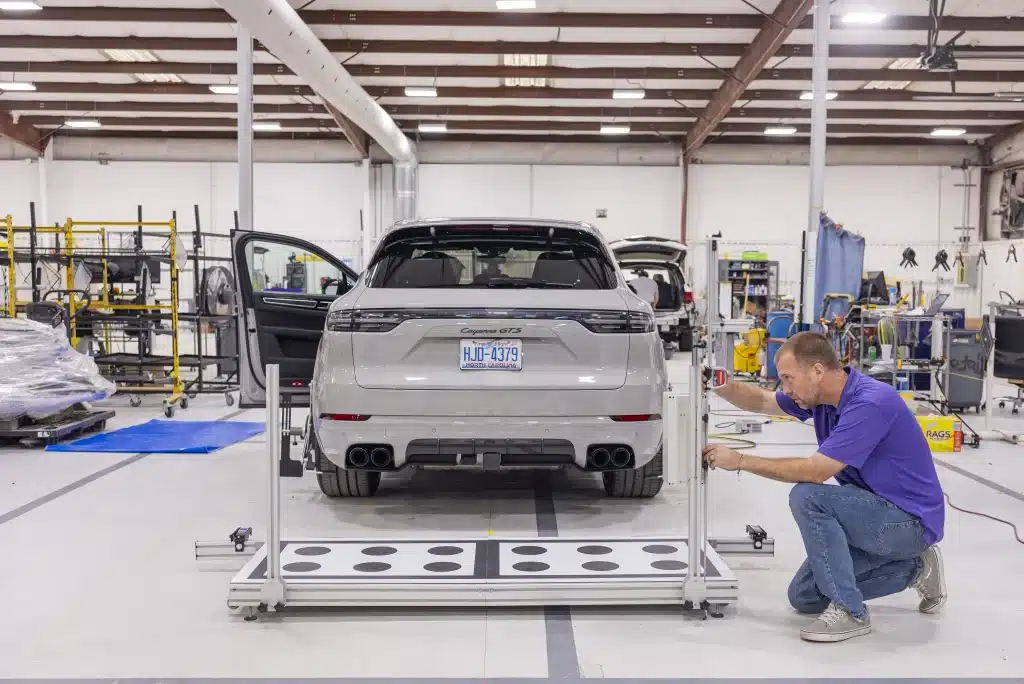
A diagnostic scan and an ADAS calibration do different jobs. A scan reads information from vehicle systems; calibration follows a vehicle-specific procedure for the affected camera or sensor. A scan alone does not replace a required calibration.
Modern vehicles rely on advanced safety technologies like automatic braking, lane departure alerts, and collision warning systems. When a vehicle sustains even minor damage in a crash, these systems can be thrown off, potentially putting occupants at risk. At Universal Motorcars in Las Vegas, our certified technicians perform thorough diagnostics and safety system recalibration to restore your car’s precision and protection.
What Is Vehicle Safety System Recalibration?
Recalibration ensures that features such as forward collision alerts, blind spot detection, and lane keeping assistance function correctly. These systems rely on sensors and cameras mounted behind bumpers, windshields, or inside mirrors. Even small misalignments or shifts after a repair can affect how these safety technologies perform.
We follow original equipment manufacturer (OEM) procedures, including both static and dynamic recalibrations, to bring your vehicle’s systems back in line.
- Static recalibration happens while the vehicle is stationary using precise tools.
- Dynamic recalibration requires driving the vehicle in controlled conditions to verify sensor accuracy.
Why Recalibration Is Critical Post-Collision
Ignoring recalibration could compromise your safety. Misaligned sensors may:
- Fail to detect pedestrians or objects
- Trigger alerts at the wrong time
- Delay emergency braking responses
Ask the repairer which manufacturer procedures apply to the damaged systems and which calibration records will be included with the completed repair.
Las Vegas Conditions Demand Precision Repairs
Driving in Las Vegas involves fast-paced highways and congested areas like the Strip. Misjudged distances or sensor lag could lead to serious incidents. Recalibrating your safety systems ensures your vehicle handles these conditions with accuracy.
Common Systems That May Need Recalibration
- Adaptive cruise control
- Forward collision alerts
- Lane departure warning
- Rear view and surround view cameras
- Blind spot detection
- Cross traffic alerts
Before vs. After Recalibration: What Changes?
| System/Feature | Before Recalibration | After Recalibration |
| Collision Warning | May trigger late or not at all | Timely, accurate alerts |
| Adaptive Cruise | Jittery or unresponsive | Smooth and consistent |
| Blind Spot Detection | May miss objects | Accurately detects vehicles |
| Lane Assist | Misaligned path guidance | Holds lane properly |
| Rear Sensors & Cameras | Incorrect alerts or visuals | Calibrated with optimal visibility and range |
Why Trust Universal Motorcars in Las Vegas?
We specialize in high-tech repairs for both luxury and everyday vehicles. We identify the applicable manufacturer procedures and the equipment, setup and checks needed for the specific vehicle.
Final Thoughts: Safety Isn’t Optional
After a crash, even if your vehicle seems fine on the surface, its hidden systems may not be. Let our experienced team inspect and recalibrate your vehicle to ensure everything works exactly as intended.
About Universal Motorcars
Universal Motorcars is a trusted collision repair and auto service provider in Las Vegas. Our expert technicians handle everything from advanced diagnostics to complex repairs on both commercial and personal vehicles. With a reputation built on transparency and precision, we’re committed to restoring your vehicle’s safety and performance.
Schedule your post-collision inspection and recalibration today with confidence in Las Vegas.

FAQs:
1. Does recalibration need to be done after windshield replacement?
Yes. Many ADAS cameras and sensors are mounted behind the windshield. Replacing it can affect alignment and typically requires recalibration.
2. Will a dashboard warning light always appear if recalibration is needed?
Not necessarily. Some systems may appear to function normally even if they’re slightly misaligned, which is why a post-collision scan is important.
3. How much does vehicle safety system recalibration cost?
Costs vary depending on the vehicle make, model, and number of systems involved. Advanced or luxury vehicles may require more complex procedures.
4. Is recalibration required by the vehicle manufacturer?
In many cases, yes. OEM repair procedures often mandate recalibration after certain repairs, part replacements, or structural work.
5. Can recalibration be done at any repair shop?
No. Proper recalibration requires specialized equipment, software, and trained technicians who follow OEM specifications.
6. What repairs besides collisions may require recalibration?
Services like suspension work, bumper replacement, wheel alignment, mirror replacement, or sensor replacement can also require recalibration.
7. How long does a recalibration service typically take?
It can take anywhere from a few hours to a full day depending on the systems involved and whether static, dynamic, or combined procedures are required.
8. Will insurance cover ADAS recalibration?
In many post-collision claims, recalibration is covered when it is required to restore the vehicle to pre-accident condition. Coverage depends on your policy.
9. Can driving without recalibration affect liability in a future accident?
Yes. If a malfunctioning safety system contributes to another collision, it could complicate insurance claims or liability determinations.
10. Do electric and hybrid vehicles require different recalibration procedures?
Often, yes. These vehicles may include additional sensors and integrated systems that require manufacturer-specific tools and protocols.
Arrange an ADAS assessment after a repair
Tell us the vehicle’s year and model, the damaged area and any work already completed. Our ADAS calibration service page explains the work available through Universal Motorcars. Contact the Post Road team to confirm the procedure and appointment for your vehicle.
For technical background, see I-CAR’s OEM calibration requirements resource. Current vehicle-specific manufacturer instructions determine the required work.