An alignment may fix a pull after an accident, but only if incorrect wheel angles are the cause and the affected parts are in good condition. It can’t straighten a bent control arm, repair a damaged tire or fix a steering component that was hurt in the impact.
If your car drove straight before the crash and now it doesn’t, the next step is to find out what changed. That doesn’t automatically mean major damage. It means checking the vehicle before assuming an adjustment will solve the problem.
Can I drive it to the shop?
If the car is difficult to keep in your lane, the steering catches or becomes unusually heavy, a wheel is rubbing, or a tire is bulging or losing pressure, pull over somewhere safe and arrange a tow. Don’t take it onto the freeway to see whether it settles down.
A mild pull still deserves an inspection after an impact. When you call, describe how the car feels and where it was hit so we can discuss whether towing is the sensible next step. You don’t need to diagnose it yourself.
“It pulls” can describe a few different problems
The details help us decide where to look:
- You have to keep correcting the steering to stay straight. That’s different from a steering wheel that simply sits crooked while the car travels straight.
- The steering wheel or seat shakes. Tell us the speed at which it happens. A damaged tire, bent wheel or imbalance may be involved; vibration alone doesn’t establish an alignment problem.
- The car moves to one side when you brake. Mention that specifically. The brakes may need attention as part of the inspection.
Michelin’s handling guidance makes these distinctions because similar-sounding complaints can have different causes. Tell us whether the symptom started immediately after the crash, after a tire was replaced, or after an earlier repair.
Road slope can also influence how a vehicle tracks. That’s something to account for during diagnosis, not a reason to dismiss a new handling change after an accident. Keep your hands on the wheel; leave any road testing to the technician when the vehicle is safe to test.
What an alignment actually changes
A wheel alignment measures wheel angles against the specifications for your vehicle and adjusts the settings the manufacturer allows. Toe describes whether the wheels point inward or outward when viewed from above. Camber is their inward or outward tilt from the front. Caster describes the angle of the steering axis viewed from the side.
You don’t need to memorize those terms. The useful distinction is between measuring an angle and repairing the part that controls it. Not every angle has a routine adjustment on every vehicle.
Alignment is also different from balancing, which addresses weight imbalance in a wheel-and-tire assembly. Bridgestone explains that difference here. Neither service is a substitute for checking impact damage.
What needs checking before an adjustment?
Start with the tires and wheels. A pressure difference or an internally damaged tire can affect how the car tracks. Michelin notes that an impact can affect both the tire and the alignment, so correcting one doesn’t necessarily resolve the other.
At Universal Motorcars, our steering and suspension evaluation also considers relevant components, looseness, visible damage and ride height. Where the impact occurred—and whether a wheel struck a curb during the accident—helps guide that inspection.
The findings can lead to different repair plans:
The parts are sound, and the angles need correcting
An alignment adjustment may be the right repair. The work should address the original concern, with appropriate checks afterward.
A tire, wheel or steering or suspension part is damaged
The damaged item needs attention first. For example, a bent control arm won’t become sound because an alignment setting has been adjusted. Measurements may help with diagnosis, but final alignment follows the repairs that affect it.
The findings point beyond an individual part
An unusual wheel position, affected mounting area or readings that cannot be brought into specification through the approved procedure may call for further measurements. That can include the subframe—the support assembly for certain mechanical components—or surrounding structure. A pull by itself is not proof that the vehicle needs frame repair.
What if the alignment report is green, but the car still pulls?
Ask for the before-and-after measurements and an explanation of any readings that remain outside specification. A green reading generally means that measurement falls within the range selected in the alignment equipment. It doesn’t tell you whether every affected part has been inspected.
The correct specifications matter, too. GM’s alignment bulletin directs technicians to verify current specifications for the vehicle, inspect relevant components and test the completed work.
If the car still pulls, tell the shop before treating the problem as resolved. The next step is to revisit the diagnosis, including tires and other possible causes, rather than assume another adjustment is automatically the answer.
Tesla, luxury vehicles and newer models need the right procedures
On a newer vehicle, the repair plan depends on the model, year and equipment. An air-suspension system, for example, introduces ride-height considerations. Steering sensors and driver-assistance systems may also have checks or calibration requirements tied to the work performed. Those steps should come from the manufacturer’s procedure for that vehicle.
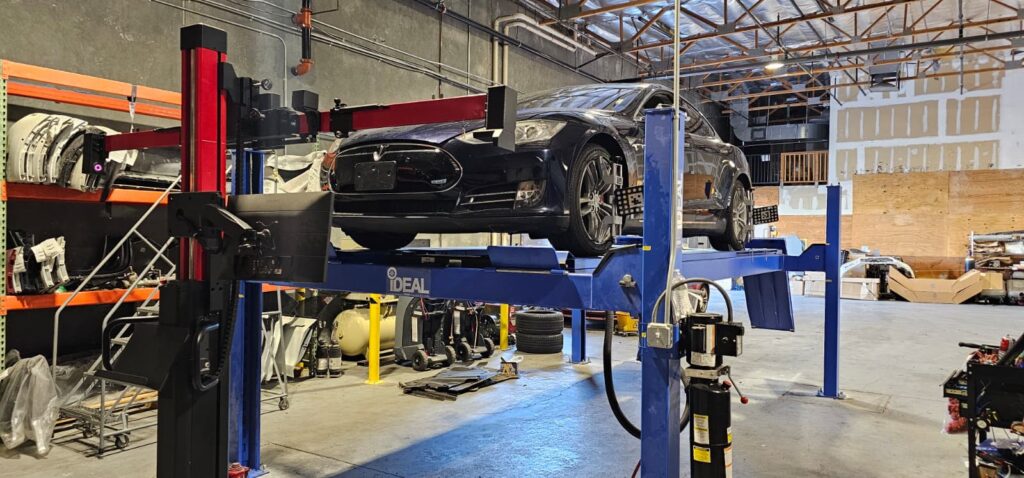
Tesla provides a useful example. Its 2024-and-newer Model 3 service instructions distinguish an electronic power-steering alignment check from a four-wheel alignment check. Tesla specifically says the electronic check should not be used to assess possible suspension damage from a collision. A software result does not replace that physical assessment.
For owners of a Tesla, BMW, Mercedes-Benz, Porsche or another luxury vehicle, the useful question is: “Which inspections and procedures apply to my car after this impact?” The badge alone doesn’t answer that, and an alignment does not automatically complete any required camera or sensor work. Our guide to sensor checks and calibration after a collision explains those separate steps.
How Universal connects the body repair with the way the car drives
A damaged fender and a new steering pull should be discussed together. When you bring a vehicle to Universal Motorcars for collision repair in Las Vegas, tell us about the handling change even if your insurance estimate only lists bodywork.
Our collision and mechanical teams coordinate the inspections, document what they find and explain the proposed work before repairs are authorized. A preliminary visual estimate can’t establish every hidden problem. If closer inspection or disassembly is needed, we explain that next step and the applicable charges and authorization.
For authorized repairs at our shop, additional accident-related findings can become part of an insurance supplement: a documented request to add necessary work to the repair estimate. We handle those repair discussions with the insurer. Approval and coverage are separate from identifying the damage, and we discuss potential customer responsibility before asking you to authorize work outside the approved claim.
If you’re paying yourself, the same inspection comes first. We’ll explain what was found and why we’re recommending the work. You should know what you’re paying for and what it’s expected to resolve.
What to bring—and what to ask
Bring the existing estimate and claim information, any accident photos, and reports from previous alignment or suspension work. Tell us which part of the car was hit, whether a wheel contacted a curb, and what feels different now.
Before authorizing work or picking up the car, these are useful questions:
- What did the inspection find that explains the pull?
- Does anything need repair before the final alignment?
- Can you explain the measurements and any remaining concerns?
- Does this repair require a steering reset or other calibration?
- How was the original handling complaint checked afterward?
Call Universal Motorcars with your vehicle’s year, make and model, where it was hit and what changed in the steering. We can help you arrange the appropriate collision or suspension evaluation:
- Spring Mountain — 5585 Spring Mountain Rd, Las Vegas, NV 89146. 702-754-6774. Passenger, luxury and performance suspension and alignment, alongside collision repair.
- Post Road — 3570 W Post Rd, Las Vegas, NV 89118. 702-430-1000. Collision repair and related mechanical coordination, with Tesla suspension and alignment also available here.
Pingback: Car Frame Damage in Las Vegas | Inspection & Repair Questions