Hearing “frame damage” changes the whole conversation. A minute ago, you were thinking about a bumper and some paint. Now you’re wondering whether you even want the car back.
Some structural damage can be repaired properly. Some damaged sections have to be replaced. And some vehicles end up being a total loss. The words “frame damage” alone don’t tell us which situation you’re in.
At Universal Motorcars, the first thing we need to explain is exactly what’s damaged and what your vehicle’s repair instructions allow. Then we can talk about the full repair, the cost and what happens next.
First, what do they mean by “frame damage”?
Ask the person who gave you that answer to show you the damaged part. A photo, a measurement report or a walk around the vehicle can make the conversation a lot clearer.
A pickup may have a separate frame underneath the body. Many cars and SUVs have a unibody, where sections of the body form the vehicle’s structure. There can also be removable subframes that support components such as the suspension or drivetrain. Damage to one of those parts isn’t the same repair as damage to the structure it bolts to.
That’s why we need more than “the front end is bent.” Which rail, mounting point or body section is affected? Is it distorted, cracked or torn? Has the impact moved something behind the part you can see?
A door that won’t close normally or a new steering pull deserves attention, but neither symptom diagnoses frame damage on its own. Our guide to a car pulling after an accident explains why suspension damage and alignment need their own investigation.
“Can’t you just pull it straight?”
Sometimes straightening is part of the correct repair. Sometimes the manufacturer requires replacement instead. That decision depends on the material, the damaged area and the procedure for that exact vehicle.
Getting a part back into shape isn’t the only concern. The repair also has to respect how that part is made and attached to the surrounding structure. Heat, pulling or cutting in the wrong place can compromise it.
For example, Ford’s steel repairability guidance gives different repair limits for different steel grades. Some components require replacement at factory joints; cutting and replacing only a section is allowed only where the applicable instructions permit it. I-CAR’s repair-versus-replacement explanation also shows why the old idea that every bend can simply be pulled out doesn’t work for every material.
If a part needs replacing, you deserve to hear the reason. “The procedure requires replacement because of this damage” is a much more useful answer than “that’s just how we do it.”
Luxury cars, Teslas and newer models need the right repair plan
A familiar-looking dent doesn’t mean a familiar repair underneath. With a newer luxury car or EV, the exact model, construction and equipment matter more than the badge alone.
Here’s a concrete example: Tesla’s 2025+ Model Y structural guidelines do not support pulling or pushing components with frame-straightening equipment. That doesn’t mean every damaged Tesla is finished. It means the repair has to follow the allowed method for the affected component.
Tesla also publishes specific repair criteria for the Model Y’s cast rear underbody. The location and severity of the damage determine what’s allowed. “It’s a casting” isn’t enough information to promise a repair or declare the whole car a loss.
On an EV, an impact near the battery needs the appropriate battery-area inspection too. A body repair estimate can’t settle that question by appearance alone. Tesla’s battery underside inspection guidance for Model 3 and Model Y vehicles with a non-structural battery, for example, sets criteria according to where and how the battery is damaged. Other battery designs have their own procedures.
Why the answer can change after we take damaged parts off
A visual estimate is a starting point. It can’t show an area that’s still covered by a bumper, trim or another damaged part.
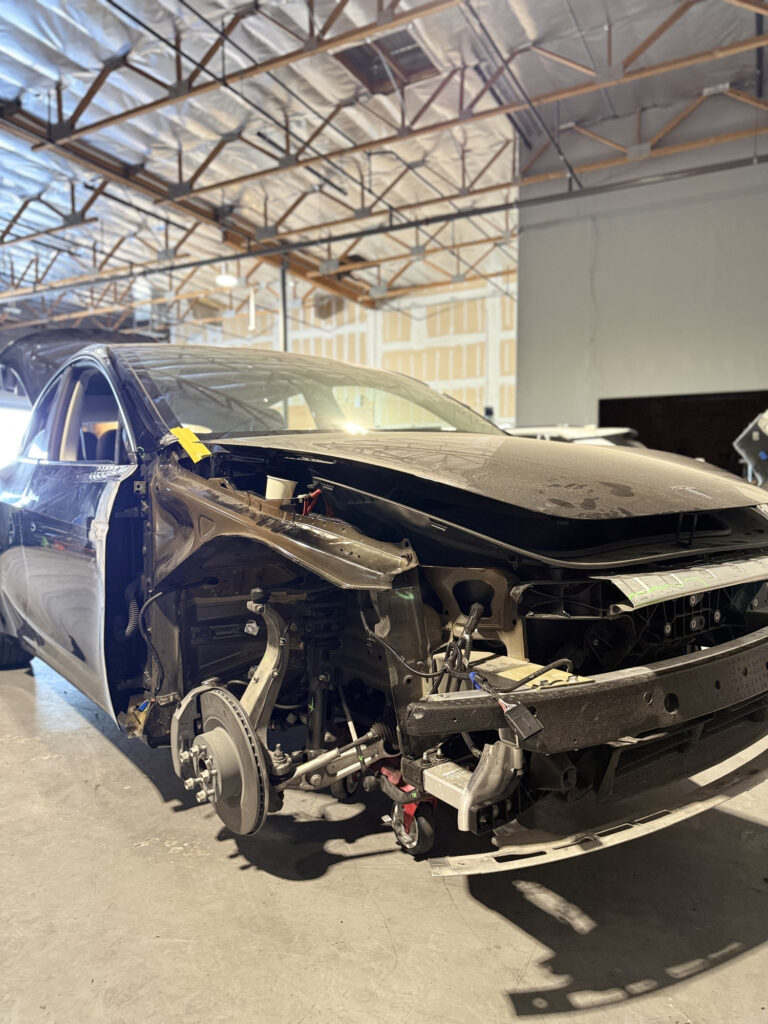
As a simple example: a front impact might initially appear to involve a bumper cover, headlight and fender. Removing those parts could reveal a damaged attachment point or distortion farther into the structure. Or the inspection may show that the underlying structure is within specification and the damage is limited to the parts attached to it. Those are very different repair plans.
At Universal, we discuss the inspection or disassembly authorization before that work. With the vehicle here, we document what we find through photographs, measurements and the relevant repair information. For an insurance repair, if more accident-related work is needed, we submit it through our insurance supplement process and handle the repair discussions directly with the insurer.
Finding more damage doesn’t mean we simply hand you a surprise bill. We explain the findings and work through the repair scope and payment. Insurer approval is still a separate decision, and we discuss any proposed customer responsibility before you authorize that work.
If it can be repaired, why would insurance total it?
Because “there’s a proper repair for this damage” and “the claim will pay to repair this car” are different questions.
The insurer considers the repair cost, the vehicle’s value and the applicable rules. As Progressive’s total-loss explanation describes, a repair can be economically impractical. A substantial repair may make financial sense on one vehicle and lead to a total-loss decision on another.
In Nevada, you may hear about the 65% total-loss rule. The statute uses 65% or more of the vehicle’s pre-accident fair market value, but its calculation excludes painting, towing and electronic-component replacement that meets manufacturer specifications. It also contains specific exceptions. You can’t reliably apply that rule by dividing the full estimate by a value you found online.
Ask the adjuster for the valuation and an explanation of the calculation. If the decision changes after more damage is found, ask which findings changed it. That gives you something concrete to discuss.
If you’re thinking about keeping a salvage vehicle, check the repair plan, title status and Nevada DMV rebuilding requirements before spending money on repairs. Repairable salvage vehicles need the required restoration and inspections before they can be registered and driven again; salvage vehicles five model years old or newer also require DMV restoration authorization before rebuilding. Some major-component replacements can require a rebuilt title even without a salvage classification.
“How do I know the repair was done properly?”
You shouldn’t have to rely on “it looks good now.” Ask the shop to walk you through what was damaged, what was repaired or replaced and how the work was checked.
Structural measurements compare specified points on the vehicle with the manufacturer’s dimensions. They help establish whether the structure is where it belongs. Tesla’s dimensional guidance is one example of how manufacturers use those measurements in damage assessment.
Measurements are part of the evidence. The correct replacement parts, attachment methods and corrosion protection matter too. A good-looking panel gap doesn’t tell you how a joint underneath was repaired.
A diagnostic scan checks electronic systems; it doesn’t measure the body structure. An alignment checks wheel angles; it doesn’t replace a structural inspection. And where the repair requires it, camera or sensor calibration is another step. These checks answer different questions.
Before pickup, ask for:
- A final invoice showing the parts and work performed.
- An explanation of the structural measurements and repair procedures used.
- The applicable alignment, scan and calibration results.
- The written repair warranty and whom to contact with a concern.
If the car pulls, a door closes differently or a warning appears afterward, tell the shop what happens and when. Don’t assume it’s something you have to get used to.
How long does this kind of repair take?
We need to know the repair before we can give you a useful date. “Frame damage” could mean very different amounts of work.
Even with a plan, there can be hiccups. A structural part can be backordered or arrive damaged. Additional findings may need insurer review. A required check may identify another issue that needs resolving before pickup.
The helpful update is specific: what’s complete, what’s holding up the next step and when we expect to have another answer. Our collision repair timeline guide explains those stages. If you have a rental, keep its coverage end date separate from the shop’s expected completion date.
Can I drive it to the shop?
The fact that it starts and moves doesn’t tell us it’s safe to drive. If the steering or braking has changed, a tire is rubbing, a door won’t latch or fluid is leaking after the impact, arrange a tow rather than testing it on the road. An inspection may still be needed even without those symptoms.
Call before moving a vehicle with suspected structural damage. Our team can discuss towing and authorized vehicle pickup and the appropriate destination.
Bring us the estimate. We’ll explain what it means for your car.
Universal Motorcars handles collision repairs and structural damage assessment in Las Vegas. Insurance and self-pay customers are welcome.
Call Spring Mountain at 702-754-6774 or Post Road at 702-430-1000 with the vehicle’s year and model, where it is now and any estimate or claim information you have. We’ll explain what we can tell from the information available and what needs checking in person.