
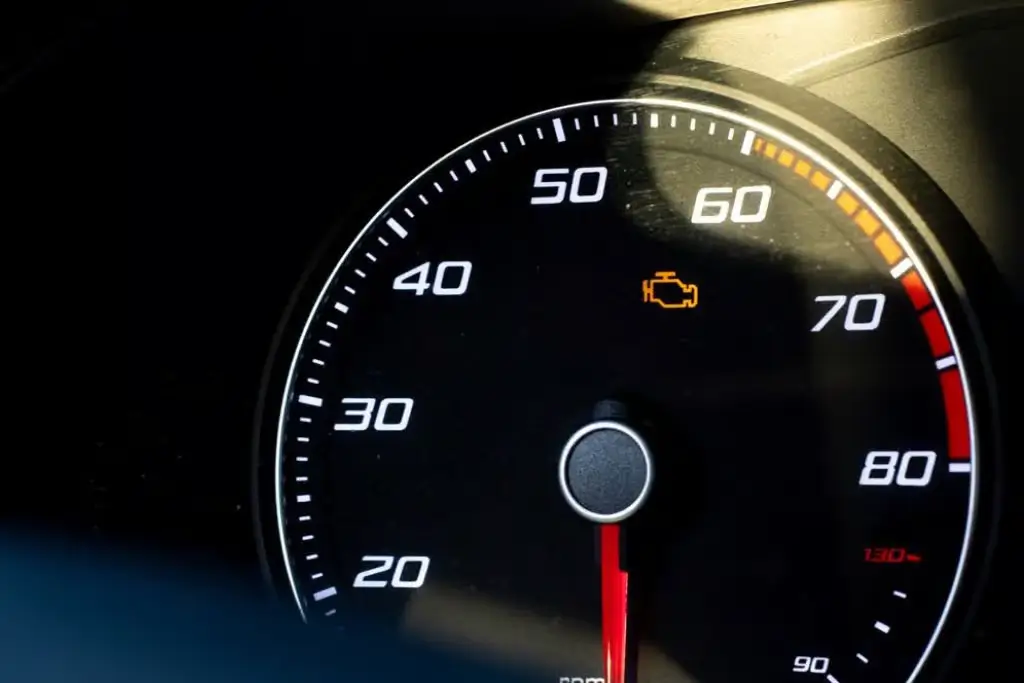
A check engine light means the vehicle has detected a fault that needs attention. The next step depends on the exact symbol, whether it stays on or flashes, any dashboard message and how the vehicle is running. The owner’s manual for your model is the starting point.
What the Check Engine Light Actually Is
The check engine light is also called the malfunction indicator lamp. On-board diagnostics monitors emissions-related engine systems and, depending on the vehicle, other powertrain functions. A detected fault can store a diagnostic trouble code and turn on the light.
The warning is a starting point for diagnosis, not a verdict that a particular part needs replacement. A lamp that comes on briefly during the normal startup check is different from one that remains on or begins flashing while you drive.
What the Colors Mean
Steady amber or yellow: arrange prompt diagnosis
A steady light can appear even when the car feels normal. Check the manual and contact a qualified shop promptly for guidance. Do not use a blanket “wait a week or two” rule. Avoid a long trip or heavy load before the warning has been assessed.
A steady light does not establish that continued driving is safe. Any rough running, significant loss of power, smoke, strong fuel smell or additional warning changes the urgency.
Flashing while driving: treat it as urgent
Flashing can indicate a misfire capable of damaging the catalytic converter. Ease off the accelerator and pull over somewhere safe. If it continues flashing, the engine runs roughly, or there is smoke, overheating or a strong fuel smell, stop the engine and arrange assistance or towing.
Consult the vehicle’s instructions before restarting or moving it. Manufacturers give different instructions for particular warning conditions, so a generic same-day appointment is not a substitute for deciding whether the vehicle should be driven.
Red oil-pressure, temperature or STOP warnings
Identify the actual symbol. A red oil-can, coolant-temperature warning or STOP message may refer to a different system from the check engine light. Follow its specific instruction immediately. Oil-pressure or overheating warnings with the engine running can require stopping safely and shutting the engine off. Do not continue just because the check engine light itself is steady.
Common Causes by Behavior
These are possibilities a technician may investigate, not diagnoses you can make from the lamp alone:
- Steady light after refueling: an evaporative-system leak, including a cap or filler-seal issue where applicable.
- Steady light with rough running or poor acceleration: ignition, fuel, air-metering or other engine-control problems.
- Flashing during driving: misfire is an important concern and requires urgent assessment.
- An intermittent light: an intermittent fault can still leave useful stored information even after the lamp goes out.
Do not buy an oxygen sensor, catalytic converter or ignition coil solely because its name appears in a code description. Testing should establish why the code was set.
What to Do First
- Once safely parked, record the warning symbol and message, whether it is steady or flashing, and any changes in the way the car runs.
- Check the owner’s manual. If the vehicle has a removable fuel cap, the light followed refueling and there are no urgent symptoms, inspect and secure the cap as directed. A capless system needs its own procedure.
- Contact a shop promptly. Tell them about symptoms and other warnings before deciding whether to drive or arrange a tow.
- Keep the diagnostic information available. Avoid clearing codes or disconnecting the battery just to turn the lamp off.
A cap-related light may take several completed monitoring cycles to turn off after the problem is corrected. There is no universal one- or two-day reset promise. Do not delay urgent assessment while waiting for a light to disappear.
Can You Drive With the Check Engine Light On?
The light alone cannot answer that question. A steady light with no other symptoms calls for prompt advice using the model’s manual and diagnostic information; it does not provide a guaranteed safe distance or waiting period.
Stop safely and arrange assistance if there is ongoing flashing, severe shaking, major power loss, smoke, a strong fuel smell, or an oil-pressure/overheating/STOP warning. If you are unsure what the warning means, get advice before continuing.
Clearing the code is not a repair
Clearing a fault code only erases information; it does not repair the cause. It can also reset emissions-readiness monitors and make an intermittent problem harder to investigate. After a repair, the technician should verify that the fault is resolved rather than relying only on the light being off.
The Bottom Line
Record what you see, follow the model-specific warning instructions and arrange diagnosis promptly. For local help, contact Universal Motorcars at Spring Mountain and explain the warning before bringing the vehicle in.
Manufacturer examples: Ford’s warning-lamp instructions and Honda’s malfunction-indicator guidance. They illustrate why a fixed waiting period cannot cover every vehicle.